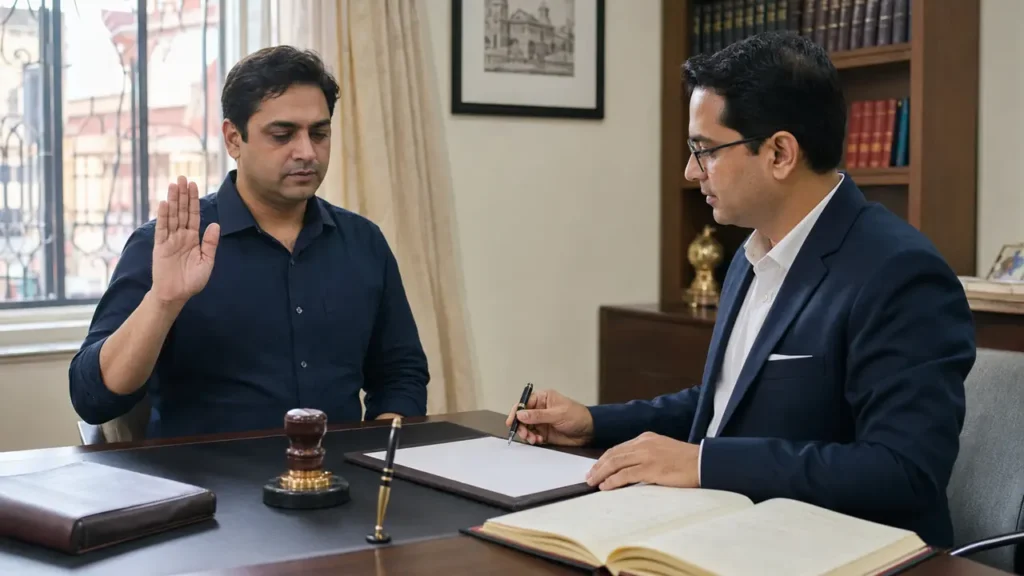
A notarised affidavit is a written statement of facts made by a person who swears or affirms that the contents are true to the best of that person’s knowledge and belief. It may be requested by a government office, educational institution, bank, employer, court-related process or another receiving authority.
There is no single rule that every declaration must be a notarised affidavit. The receiving authority determines whether it wants an affidavit, a simple declaration, a self-attested statement, an affidavit before a particular officer or a different prescribed form.
What Makes A Document An Affidavit?
An affidavit normally identifies the person making the statement, called the deponent, sets out the relevant facts in numbered paragraphs and ends with a verification. The deponent must understand the contents and make the required oath or affirmation before the authorised person.
Section 8 of the Notaries Act, 1952 includes administering an oath to or taking an affidavit from a person among a notary’s functions. The notarial act is performed under the notary’s signature and official seal.
Situations Where An Affidavit May Be Requested
Name Or Identity Declarations
An authority may request an affidavit when a person needs to explain a variation in name, spelling, initials or identity details across records. An affidavit does not itself amend the issuing authority’s record; a separate correction procedure may still be necessary.
Address Or Residence Declarations
A residence-related declaration may be requested where the receiving authority needs a formal statement and the applicant does not have a particular supporting record. Whether it is accepted depends entirely on that authority’s rules.
Loss Of A Document
For a lost certificate, identity record or other document, the issuing authority may ask for an affidavit describing the loss. A police diary, public notice, indemnity or other step may also be required.
Educational Or Employment Matters
Institutions sometimes prescribe affidavits for gaps, declarations, anti-ragging requirements, document discrepancies or employment information. Use the institution’s current format rather than a generic draft.
Family Or Personal Declarations
An affidavit may be requested for marital status, family particulars, dependency, date of birth explanations or other personal facts. Sensitive or legally significant statements should be prepared with appropriate professional advice.
Property, Tenancy Or Business Matters
Authorities may request affidavits connected with possession, tenancy, business applications, licences or property records. Such an affidavit does not replace a required deed, agreement, registration, tax filing or licence.
Documents To Prepare
- The receiving authority’s prescribed affidavit format or checklist
- Valid government-issued photo identity proof
- Current address proof, when relevant
- Supporting records for every material fact stated
- Correct names, dates, addresses and reference numbers
- Recent photographs, if the format requires them
- Witness details and identity proof, if witnesses are required
For a broader checklist, read Documents Required For Notary Service In Salt Lake And Kolkata.
How To Prepare The Affidavit
- Obtain the exact requirement from the receiving authority.
- List the facts in chronological and simple language.
- Check every spelling, date and document number against the records.
- Attach or refer to supporting documents only as appropriate.
- Review the final draft and understand every statement.
- Sign only as required before the authorised professional.
Never include a fact that you do not understand or cannot truthfully affirm. If the affidavit affects legal rights, property, court proceedings or another high-stakes matter, obtain legal advice on the wording.
When Notarisation May Not Be Enough
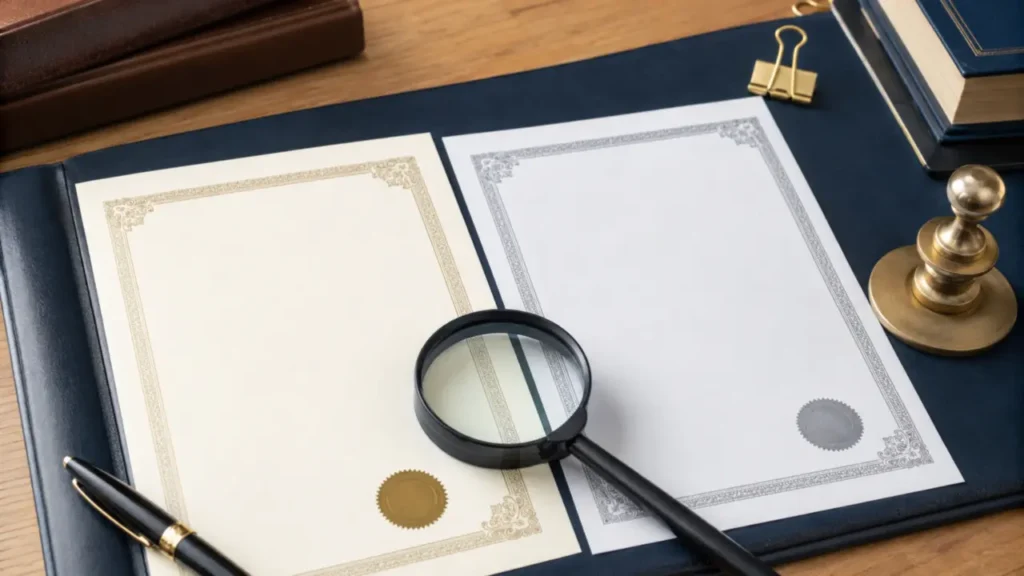
A receiving authority may require an affidavit before a magistrate, oath commissioner or other specified officer instead of, or in addition to, a notary. A court or statutory form may prescribe its own procedure. Documents intended for use abroad may also require authentication, apostille or consular legalisation.
Notarisation does not make a false statement true, cure defective supporting records or replace a mandatory registration or official correction process.
Common Mistakes To Avoid
- Using an outdated online template
- Signing before confirming the required procedure
- Leaving blank paragraphs or incomplete verification
- Giving dates or names that conflict with supporting records
- Failing to identify the purpose and receiving authority
- Assuming one affidavit will be accepted by every organisation
- Making statements without understanding their legal effect
Arrange A Notarised Affidavit In Kolkata
When you contact Maa Laxmi Quick Service, share the purpose, receiving authority, prescribed format and supporting records. We provide Notary Service support in Salt Lake, New Town and Kolkata, with regulated notarial work completed through qualified professionals. Contact us before you visit to confirm what to bring.
Frequently Asked Questions
Can I Write My Own Affidavit?
You can prepare the facts, but the format and wording should meet the receiving authority’s requirement. Obtain professional drafting or legal advice where the statement affects important rights or obligations.
Should I Sign An Affidavit At Home?
Usually, the deponent signs as part of the required oath or affirmation before the authorised person. Confirm the procedure and avoid signing in advance when presence is required.
Does An Affidavit Correct My Official Record?
Not automatically. The issuing authority may require a separate correction application and supporting documents.
How Long Is A Notarised Affidavit Valid?
An affidavit does not have one universal validity period. The receiving authority may require a recently executed affidavit or may set its own time limit.
Disclaimer: This article provides general information and is not legal advice. Affidavit requirements vary by receiving authority and purpose. Regulated notarial and legal work is completed through qualified professionals.

 WhatsApp Us